
Written by Akis Liantzouras · AWGMeta
The first ambassador I met in my life was the Frenchman Bruno Delaye, in the autumn of 2003, with elections and the Olympic Games ahead of us. Michel Mateu, the remarkable owner of France’s Hexis, whose products we had only just begun importing into Greece, introduced us. He had come to Athens with his wife for a three-day break, which I — armed with youthful innocence and that national inability of ours to let a visitor catch their breath — turned into an oriental festival of negotiations, haggling, tsipouro and hospitality to the point of collapse.
In the historic building of the French embassy, I looked at photographs of Karamanlis with Giscard d’Estaing, and of Venizelos with Millerand during their years of exile in Paris. I thought about the periods in which those two Greek politicians had been away from Greece, when some would have sworn that their political capital was spent. History, of course, had reserved for them a swift return and a place in collective memory as national leaders. I asked Delaye how you recognise a person’s value when others have already written them off; what a diplomacy like France’s sees and keeps a door open for, where others see only an exit. He looked at me like a teacher watching a pupil finally leave the nonsense behind and ask a worthwhile question. His answer stayed with me: ‘Mon ami, the diplomat’s job is to recognise the future. And make it a friend.’
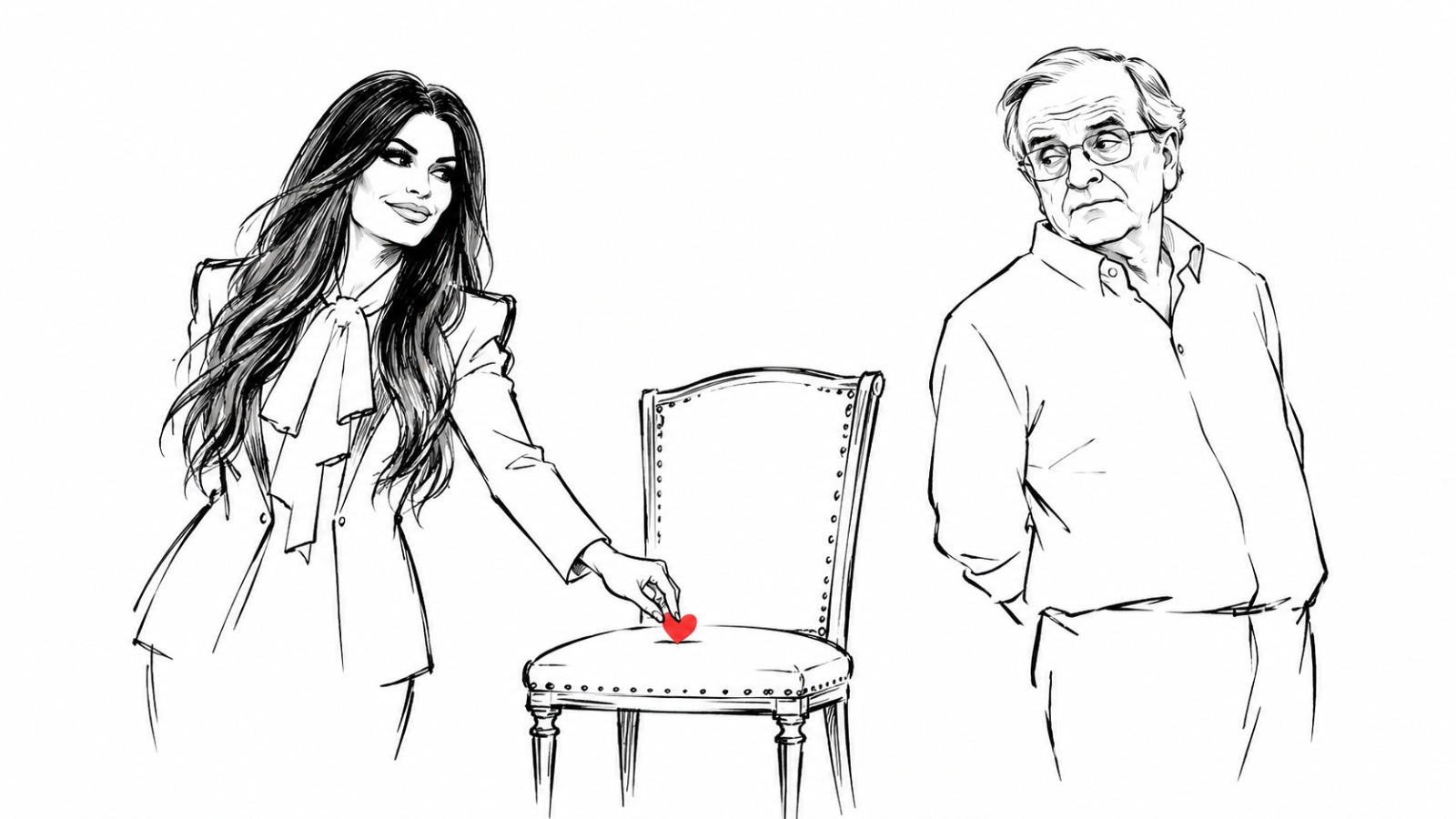
Years later, a heart from Kimberly Guilfoyle appears below a post about Antonis Samaras, and I hear that phrase again. According to To Pontiki, the like was placed on an Instagram post by MEGA presenting his attack on the government. Samaras was speaking about North Macedonia, Greek-Bulgarian relations and what he sees as Greek concessions. No cat falling off a sofa, no Santorini sunset. A political knife on the counter. Beside it, the American ambassador’s digital approval. That is where the coffee needs stirring. It is one thing for a cousin from Peristeri to tap a heart; it is another for an account accompanied by a flag, an embassy and access to Washington.
The intention remains unknown. We have no right to baptise a tap as an American plan, nor to stage a coup using an icon as raw material. Anyone who has already made Samaras prime minister from a heart needs water and some shade. But ‘come on, it means nothing’ is just as lazy. The political meaning of a move does not always wait for intention to sign its permission. Once a move becomes visible, it enters other people’s heads. One sees recognition, another a warning, a third an opportunity to call someone they had already crossed out. Even a mistake, when it wears a diplomatic suit, can leave a mark.
Let us try the obvious reading — perhaps reinforced by the embassy’s conspicuous lack of response on the eve of Secretary Rubio’s visit to Greece: that it was a deliberate gesture. What do you buy with a like? A little familiarity, a little public recognition, a place in the recipient’s memory. Cheap, almost free. What do you retain? The ability to approach later without appearing as a stranger who remembered friendship only when power came into view. That is the pre-purchase that interests me: an investment in the chance that the other person may be useful tomorrow. An experienced negotiator stays in touch with someone who may change the terms tomorrow, even if they are sitting outside the room today. We often look at who has the chair. They also look at who can pull the tablecloth.
Samaras does not need to return as prime minister to have value in such a calculation. He can matter as a pole of influence, a speaker to a dissatisfied audience, a person who imposes political cost on government choices. Those are political possibilities, not electoral prophecies. His contact with Guilfoyle also has a public precedent: in June, she announced their meeting on Greek-American relations. The heart therefore appears inside a real relationship. It does not prove an agreement. But it makes the question more interesting: what does a foreign interlocutor see in a politician whom the domestic system may regard as the past? Perhaps he retains a usefulness that does not show up in the government group photograph.
There is a second recipient of such a move: the person who governs. If intentional, it could work as a small reminder that international relationships do not come with an exclusivity contract. You have access to your powerful friend; the person firing at you politically may have access too. You understand it on the pavement without a postgraduate degree: you see your best client having coffee with the competition and suddenly remember that loose end you had left for tomorrow. You do not know what they are discussing. That is exactly why it gnaws at you. Uncertainty can discipline more effectively than a clear demand. Whether that happened here remains a hypothesis. The mechanism, however, is perfectly intelligible.
I do not know whether Guilfoyle pre-bought a friendship or simply tapped a heart. I do know that the convenient certainty of ‘it means nothing’ also requires evidence. Delaye had given me a way of looking: pay attention to relationships built before their usefulness becomes obvious. That leaves an uncomfortable question on the table. If the gesture was deliberate, what future usefulness does it recognise in Samaras? And how peacefully can a government that considers itself irreplaceable sleep when its powerful friend publicly shows that it also remembers the opponent’s phone number?
Source: https://www.iapopsi.gr/arthro-oi-presveis-den-kanoyn-like-proagorazoyn-filies/ ↗