
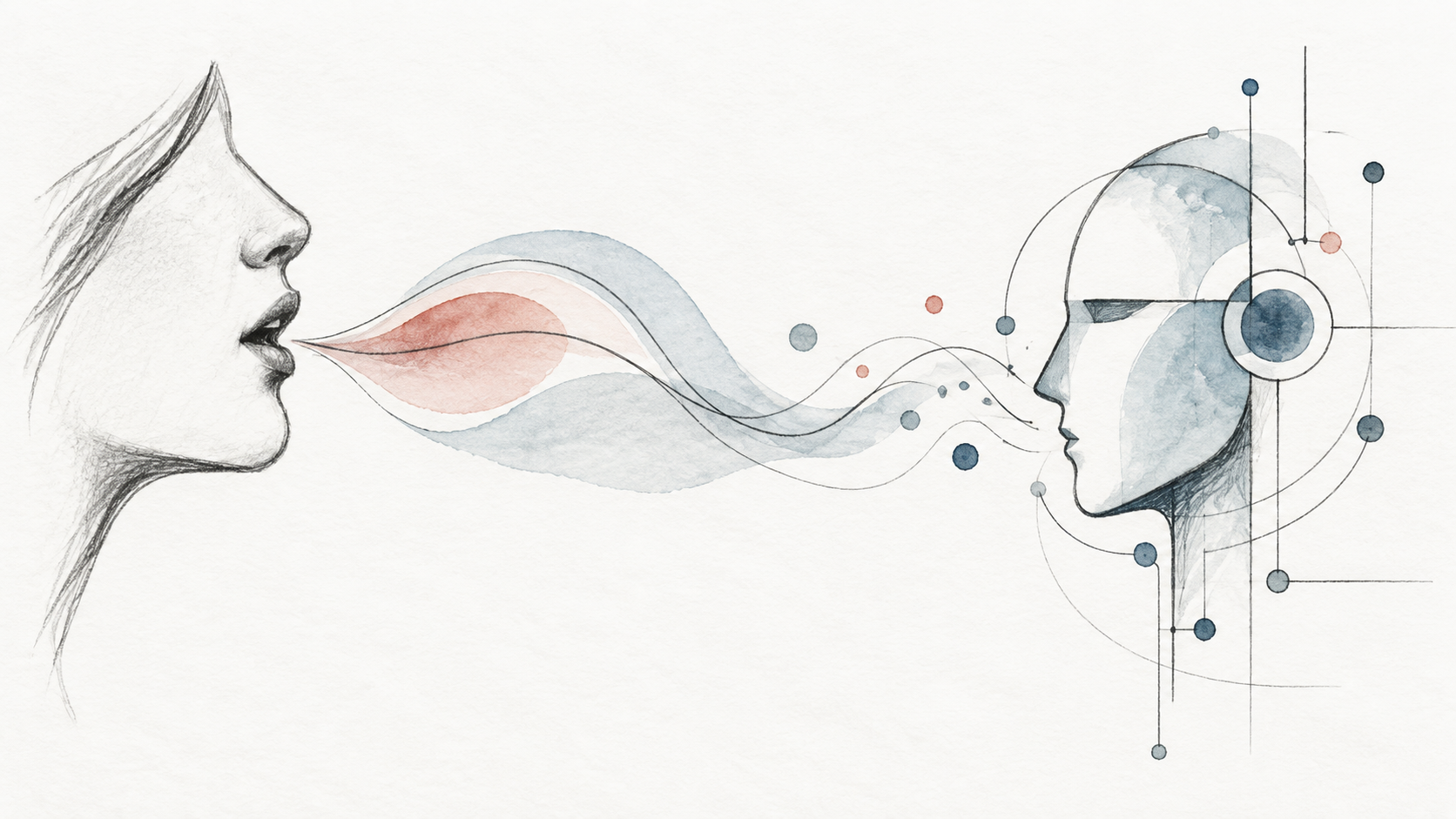
The best advertising has always been the kind that did not look like advertising. But now, between the customer and the brand, a new interlocutor has arrived: Artificial Intelligence.
Written by Akis Liantzouras & Spyros Seriatros — Co-Founders, AWGMeta
There is something almost irritating for those of us who make a living from advertising: the most powerful form of communication in the world does not pass through an agency, has no storyboard, needs no marketing director’s approval and appears in no media plan. It happens at a table, in a car, in an office or in a WhatsApp message. Someone tells someone else, ‘go there, it is good,’ and six words suddenly carry more force than thousands spent on impressions, frequency, reach and conversion funnels. However advanced we become, however closely we follow consumers from their first click to checkout, people still trust someone they regard as one of their own more than a brand that paid to speak to them.
That is word of mouth, and we probably underestimated it because it does not fit neatly into a dashboard. Advertising buys access to attention; word of mouth transfers trust. The distinction is huge. In one case, the company speaks about itself. In the other, a third person places their own name and credibility beside the product. That is why some businesses have been built in a manner almost heretical to classical marketing manuals: instead of shouting louder, they gave people more reasons to talk about them.
Sklavenitis is perhaps the clearest Greek example. For years it did almost everything that would frighten a young marketer in their first meeting: little conventional advertising, quiet tones, limited digital presence and none of the permanent aggression of offers, contests and noisy promotions that defined much of retail. Yet it grew, became hugely recognisable and, crucially, built something that cannot easily be bought: a distinct reputation. Not because it told people who it was, but because people ended up telling one another who it was.
This is the trap that communication people often fall into. We think communication is what we produce: the campaign, the spot, the post, the ad, the event. In reality, a company communicates long before the agency opens PowerPoint. It communicates through the price on the shelf, an employee’s behaviour, how quickly it solves a problem, how it speaks to an irritated customer and whether its people go home and curse it or defend it. Those are media. You simply do not buy them from a media shop.
Somewhere along the way we came to believe that communication can fix everything. If the product is mediocre, we will find a better concept. If the service leaks, we will add better storytelling. If customers do not love us, we will raise frequency until they remember us from exhaustion. But the market is not as foolish as we sometimes wish. Advertising can delay the moment of truth, dress a product better and give it a chance. It cannot manufacture an experience that does not exist forever.
No referral programme saves something nobody wants to recommend.
The right reading of word of mouth is therefore not ‘do not advertise’. That is childish. It is: make sure there is something real worth advertising. Dropbox gave satisfied users a reason to bring in other users. Duolingo turned brand personality into daily content. Zara built desire through speed and scarcity. Costco made value part of its identity. Different companies and models, one principle: first create a reason for conversation, then let marketing multiply it.
This is where the story becomes far more interesting, because a new player has entered the conversation. Until yesterday, we asked a friend: ‘Which car should I buy?’, ‘Where should I eat?’, ‘Which hotel is worth it?’, ‘Which company is serious?’ Today, more and more people open an AI system and ask exactly the same questions. This is not another digital habit. It changes the system of influence itself: between the brand and the final decision now stands a non-human adviser that searches, compares, correlates and synthesises information before making a recommendation.
That is where things become uncomfortable. The machine is not moved by the celebrity in your spot, impressed by your brand film or persuaded that a company is premium because it calls itself that on its website. It looks at what has been written about you, how others describe you, what customers say, how consistent your image is, whether references to the brand agree with one another and, above all, whether enough reliable material exists for it to understand exactly what it should recommend you for.
Word of mouth, then, is not dying. It is changing mouths.
For two decades, businesses learned to fight for a position on Google. Now they must learn to fight for a position inside the answer. SEO is not disappearing, but something broader is born beside it: the need for a brand to be not only searchable but understandable. An AI system must be able to understand who you are, why you differ, who trusts you, which problem you solve and in which context your name should appear. Public relations, reviews, earned media, social conversations, content, customer experience, reputation, SEO and AI visibility are beginning to form a single ecosystem.
And perhaps this is the great irony of the new era. The more we talk about AI, the more we return to something primitively human: reputation. You can buy reach, views, clicks, influencers, outdoor, native, performance and television time. But you cannot easily buy ‘I know them, they are good.’ Soon, it will not be enough for people to say it to each other; there must be enough real traces for the machine to understand it too.
Perhaps the right question for a brand today is not ‘what campaign will we make?’ It is much harder: if we stop talking about ourselves, what do others say? And when someone asks an AI about our category tomorrow, will we exist inside the answer at all? That is where the next marketing begins.
Source: https://awgmeta.com/thinking/from-word-of-mouth-to-word-of-ai ↗